Remember Motorola Mobility? Google bought it for $12.5 billion in 2011, and the smartphone maker hasn’t released one new device since. Now Motorola is ready to unveil several new Android phones between now and October. The upcoming flagship device from Motorola will be called the Moto X, and it will be assembled in Texas.
The news was just announced onstage by CEO Dennis Woodside at the D11 conference.
Verizon has today unveiled the Motorola DROID RAZR HD and the DROID RAZR M in metallic blue. Both devices are exclusive to Big Red — like the original blue Motorola DROID RAZR — and they’re available from today.
Even though we love the HTC One, there are really only two smartphone manufacturers in the world right now that matter: Apple and Samsung. The two companies have been fighting for every square inch of the global smartphone market, and have managed to take all of the profits in the process.
A new report from Canaccord Genuity shows that while some manufacturers made improvements in the March quarter of 2013, Apple and Samsung still account for 100% of the industry’s profits, with Apple taking 57% and Samsung snatching up the remaining 43%.
Rumors surrounding an upcoming smartphone from Motorola — believed to be called the Motorola X or the Google X — have been circulating for a number of months now, however, we’re yet to see any real evidence that the device exists. But new AnTuTu benchmarks for a “Google X” running Android 5.0.1 Key Lime Pie suggests the device may soon be on its way.
The U.S. International Trade Commission (ITC) has officially ruled in favor of Apple against Google’s Motorola Mobility in a patent case that began in 2010. The last patent Motorola was using to sue Apple for infringement has been ruled invalid by the ITC.
Motorola sued Apple for allegedly violating six of its patents three years ago, and today’s patent was the last of six patents to be thrown out of court. If Motorola would have proven Apple’s infringement of this particular patent, the ITC could have possibly blocked sales of certain iPhone models.
Sky Go has today been updated to add support for the latest flagships from Samsung, Sony, HTC, and Motorola. The app now works on the Galaxy S4, the HTC One, the Xperia Z, and the RAZR HD.
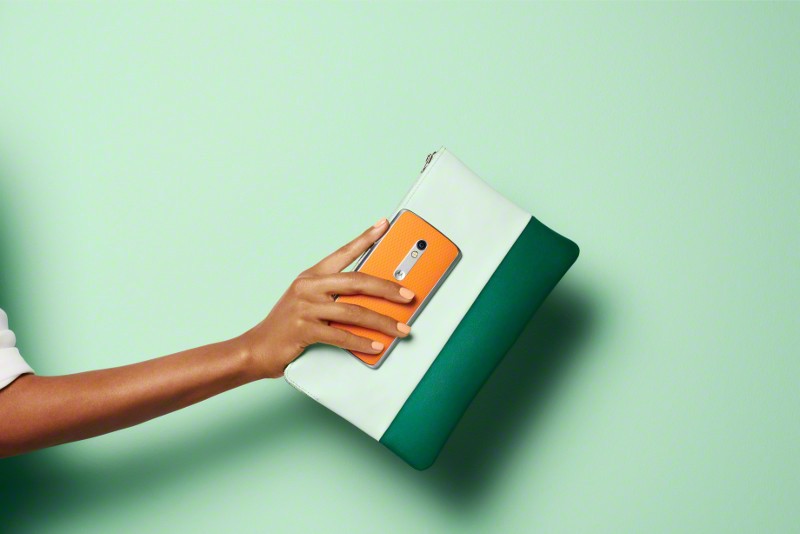
Motorola is expected to announce a new Android flagship called the X Phone sometime this year, and recent rumors suggest that it’ll be worth getting excited about — particularly if you like pretty colors. According to an unnamed source at Motorola, the device will be available “in over 20 different colors.”
U.S. District Judge Robert Scola believes Apple and Google-owned Motorola are more interested in using litigation as a business strategy than they are in resolving patent disputes. Both companies accused each other of infringing patents related to wireless technologies back in 2010, and today the case is still on going.
“The parties have no interest in efficiently and expeditiously resolving this dispute; they instead are using this and similar litigation worldwide as a business strategy that appears to have no end,” said Judge Scola in an order dated yesterday. “That is not a proper use of this court.”
With Android 4.2, Google completely revamped the camera experience with a brand new interface and features like Photosphere. While the new UI may seem like a welcome change, it is poorly laid out which can make selecting the intended option cumbersome.
The lack of some downright basic options like scenes and timer mode does not help the matter, either. Worse, on the Nexus devices, the camera app has an auto-focus bug that can often lead to blurry photos.
While Motorola phones are not particularly known for their camera performance, the camera application on their handsets is perfect for most, with just the right amount of settings. Here is how you can get the Motorola camera app on your Android 4.0+ handset.
One of the biggest complaints about Android, is that Google will announce a new version of Android, but then it takes over six months for that software to actually get on your phone. What gives?
The guys over at Gizmodo decided to talk to both manufacturers and wireless carriers to find out what’s the hold up. It seems like a software update would be a pretty straightforward process, but what they found was a myriad of problems that can take months to answer before your Android phone gets an update.