Android and iOS managed to grab a whopping 92.3% of all smartphone shipments during the first quarter of 2013, with a total of 199.5 million units sold worldwide. There are no prizes for guessing which of the two platforms grabbed the most market share.
Apple is beginning to close the gap on Samsung over shipments of smart connected devices, which includes computers, smartphones, and tablets. The Cupertino company grabbed 20.3% of the market by the end of 2012, according to IDC, while Samsung just about had the edge with a 21.2% share.
Samsung smartphones outsold those from rivals Apple, Nokia, and Lenovo in China throughout 2012, allowing the Korean company to claim the biggest share of the Chinese smartphone market, according to the latest report from Strategy Analytics.
Nokia had claimed the top spot in 2011, but the Finnish firm has struggled to compete with Samsung’s Galaxy devices this time around, and couldn’t even make its way into the top five.
Samsung has launched some of the post popular Android handsets of all time, with its Galaxy S series — which includes the Galaxy S II and the Galaxy S III — selling more than 100 million units. But the devices certainly aren’t popular for their build quality.
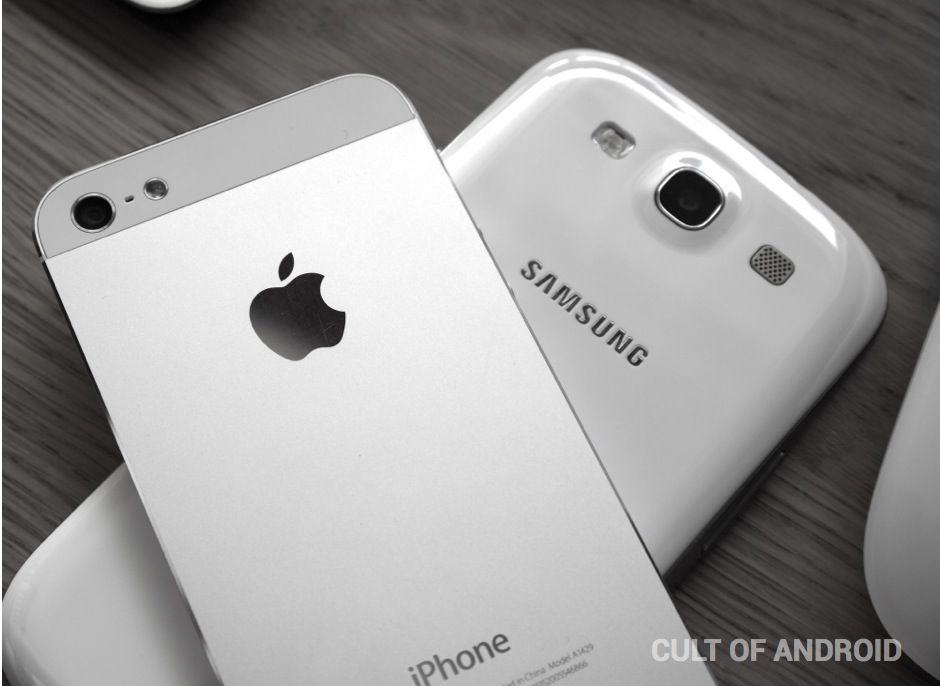
All of Samsung’s devices are made of plastic, and although they look good, they don’t feel anywhere near as nice as competing handsets like the iPhone 5, the Nexus 4, and any of HTC’s high-end Android handsets — particularly the new HTC One — which use materials like glass and aluminum to provide a premium feel.
But Samsung isn’t about to change that for the upcoming Galaxy S IV. The Korean company has confirmed it will continue to use plastic, and it has its reasons for doing so.
Apple has overtaken Samsung to become the largest mobile phone vendor in the United States for the first time. The Cupertino company captured a record 34% market share during the fourth quarter of 2012 with around 17.7 million devices sold, while Samsung captured 32% with around 16.8 million devices sold.
Samsung has today announced its financial results for the fourth quarter of 2012, which slightly exceed the estimations that were set by the Korean company earlier this month. It recorded an operating profit of 8.84 trillion won (approx. $8.27 billion) during the three-month period, on 56.06 trillion won (approx. $54.45 billion) in revenue. That’s a 10% increase in profit over the previous quarter, and a whopping 89.3% increase in profit over the fourth quarter of 2011.
If you believe recent reports and predictions from analysts, Apple must make its iPhone cheaper or introduce a low-cost model if it wants to compete with Samsung going forward. The Korean company currently boasts the largest smartphone market share in the United States, and its lead is expected to increase throughout 2013. But did you know that Apple has actually sold more devices? 88 million more, in fact.
Raymond James analyst Tavis McCourt has been comparing Apple’s cumulative smartphone sales with Samsung’s, and it appears the Cupertino company’s iPhone outsold the Galaxy S and Galaxy Note lines 219 million to 131 million.
A Dutch court has today ruled that a number of Samsung’s Galaxy Tab tablets do not infringe Apple designs. The court cited a previous decision made by a High Court in the United Kingdom back in October 2012, which ruled Samsung’s devices are “not as cool” because they lacked the “extreme simplicity which is possessed by the Apple design.”
Apple and Amazon are set to enter settlement talks over Amazon’s use of the term “Appstore,” Bloomberg reports. Apple has filed a trademark infringement lawsuit against the retail giant, claiming that its Android software store could be confused with its own App Store for iOS. A U.S. Magistrate Judge has now ordered the pair to enter talks and try to settle the case ahead of the trial.
Samsung and Apple are the only two smartphone vendors currently seeing growth in the United States, and although it was Apple that saw the most between September and November of last year, it’s Samsung who will attract most customers throughout 2013. The Korean electronics giant will see 35% growth over the next 12 months, according to Strategy Analytics, further increasing the lead over its arch rival in Cupertino.