How Many Operating Systems Can Google Handle? Three?
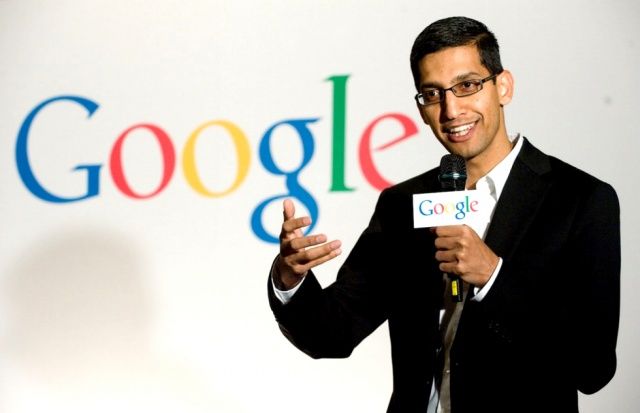
Google reassigned former Android chief Andy Rubin and put the head of the Chrome group, Sundar Pichai, in charge of Android.
A lot of people think this means Android and the Chrome OS will be merged into a single operating system.
I think that’s crazy talk.
Google has demonstrated an unprecedented comfort level with running multiple, competing product lines.
Although they’ve launched many services that you might call “social networks” at present they manage two social networks: Google+ and Orkut.
Could you imagine Facebook or Twitter or Pinterest or any other company running two separate competing social networks?
Google also has two completely separate initiatives for making and selling mobile hardware: the Nexus line of phones and tablets and Motorola!
Although many companies, especially Asian electronics giants like Samsung, make multiple competing handsets, you don’t see them with multiple competing handset companies — and you couldn’t imagine Apple, Blackberry or Nokia running completely separate corporate organizations for making mobile devices. (Sony maybe.)
Uniting Chrome OS and Android simply makes no sense.
Chrome is based on the concept of 100% cloud computing that takes place inside a browser. Android is based on the concept of apps running on the device itself, not in the cloud, for the most part.
The only logical way to unite the two would be to kill Chrome, then sell Android-based Chromebooks where there is an artificial lockdown on apps that require them to run from the cloud.
Actually combining the two would be like building a flying car. It sounds great, but in reality it’s a lousy idea.
The trouble with “flying cars,” also called roadable aircraft, is that the compromises necessary to unite these two vehicles results in every case in crappy cars and crappy airplanes.
Non-pilots think “flying cars” sound cool, but actual pilots rarely buy them. It’s much better to buy a 100% car and, separately, a 100% airplane.
The same would be true if you actually united Chrome and Android. The compromises you’d have to make in order to unite them could ruin both.
Let’s also remember that Google is working on a third operating system: whatever powers the Google Glass project.
I know, I know: it runs Android. But we’ve heard this kind of thing before.
Microsoft spent years trying to convince us that its various mobile operating systems were “Windows.”
When Steve Jobs announced the iPhone in 2007, he looked the world in the eye and said that the iPhone runs Mac OS X.
Companies always tell you that tiny new hardware runs the same operating system as the bigger hardware that’s been around for a while. But I can’t think of an instance where that has actually been true.
Google glass will almost certainly function as a peripheral device to an Android phone. But the device itself will probably require some sort of operating system functionality, and more importantly an app ecosystem.
If Google Glass apps have to be specially written and won’t run on regular Android — and if regular Android apps don’t run on Google Glass, then Google Glass is a separate and distinct platform from Android.
So if I had to predict, which I do — I’m a professional, don’t try this at home — I would predict that a year from now Google will be managing three distinct operating systems: Chrome OS, Android and the Google Glass OS.
Even if they’re all called Android and even if they’re all headed by Sundar Pichai, there will be three. Three sets of code. Three platforms to develop for. Three separate and incompatible sets of apps for users.
What’s wrong with that? Nothing!
The best case scenario is that users are given a choice between a really good cloud-based, browser-centric platform, a mobile, app centric platform other wearable computing platform.
It’s more important that each of these functions as a pure and constantly upgraded and perfected expression of the computing paradigm.
The goal of unifying platforms should be subordinated to the goal of perfecting user experiences.
And if there’s any company skillful at managing multiple, even competing, product organizations and product lines its Google.
So good luck to Andy Ruben and congratulations to Sundar Pichai — or vice versa.
From my perspective, it appears that the Chrome OS, Android, and the whole Google Glass project are looking more awesome by the day.
I doubt Google will “fix it” by unifying, because it ain’t broke.


