
How Google Could Solve Mobile’s Biggest Problem
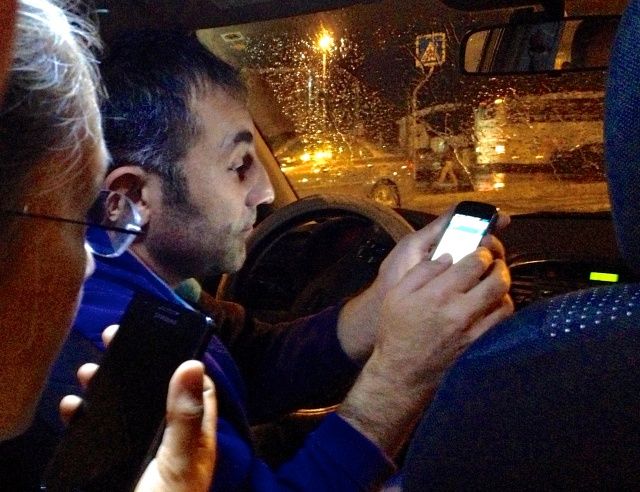
We simply couldn't get a Turkish SIM card to work with our Android phone. While trying to make it across Istanbul during a storm, we had to ask our driver to use his phone to get directions.

We simply couldn’t get a Turkish SIM card to work on my Nexus. While trying to make it across Istanbul during a storm, we had to ask our taxi driver to use his phone to get directions. It would have been nice to just use Google Maps on my own Android phone.

An unpleasant phone call with AT&T yesterday highlighted for me what I consider to be the biggest unsolved problem in mobility: using a smartphone in a foreign country.

Phone calls are expensive. Mobile broadband is either expensive, hard to find or both. And even WiFi can suck.

According to the UN’s World Health Organization, the human race takes more than 900 million trips to countries other than their own each year. It’s a huge problem affecting a very large number of people.

I’m a digital nomad and I live abroad. In the past nine months, I’ve lived in Greece, Turkey, Kenya and Spain. Believe me: Getting connected abroad is harder, more expensive and less satisfying than it should be. 

I carry both an iPhone and a Nexus Android phone. The iPhone is under contract with AT&T, and the Nexus is unlocked. In each country I visit, I buy a pre-paid SIM card for the Nexus so I’ll have either voice or data or both while not within range of WiFi.

It usually takes a few days of going from store to store looking for something that both works and is reasonably priced.

I use my iPhone for calls using Google Voice and Skype and also for Google+ hangouts — all when I’m on a WiFi network.

As you can see, I barely use AT&T’s services. No data, no phone calls. The only thing I use them for is a very occasional text message and also to provide an anchor phone number for Google Voice. (The contract I’m currently on is the last mobile contract I will ever sign.)

For these almost worthless and extremely minimal services, I pay more than $100 per month for a two-year contract total of more than $2,600. What a sucker.

So imagine my surprise to discover that my most recent monthly bill had an extra $150 in roaming charges. Not only was I paying a lot for next to nothing, I was being charged extra for more nothing. We checked past bills, and found out that extra roaming charges were added to every monthly bill since we left the US last summer totaling $350.

It turns out that people called me using my secret AT&T phone number, which I had never given out to anyone, and I answered the phone and had conversations with them believing it was a Voice or Skype call. (I don’t know how they got my AT&T number — I give out only my Google Voice number.)

In what other sphere of life can you accidentally spend $350 and not know it?

I’m often on a WiFi network, and I make and receive calls all the time using whatever WiFi connection I have access to. It’s no big deal, and I didn’t think it was possible to receive regular roaming calls on my iPhone because I have “Cellular” switched off in the settings. I thought that any incoming call on the iPhone must be a Voice or Skype call, so I answered.

When I asked the AT&T rep how to set my phone so I could not receive roaming calls, she said the only way is to set it on airplane mode, which turns off not only voice, but also data, location and Bluetooth. In other words, don’t use your phone at all and you’ll be fine. You give us $2,600 and you get nothing — not even a phone usable on WiFi. What’s the problem?

Fortunately, there’s another way to prevent this kind of thing: Cancel my AT&T account, which is what I’m going to do, and never sign another mobile contract.

(By the way, after whining about it for awhile, the AT&T lady credited our account by about $311.)

My ordeal is one tiny example of the epic struggle international travelers face when trying to use a smartphone abroad. Overall, getting the ability to use your own phone number abroad and also get connected on the Internet requires a lot of research, a lot of money, a lot of hassle and a lot of risk.

It seems to me that it should be possible for you to go to a foreign country, use your own phone number and get unlimited data connectivity for a reasonable price. Sure, charge me more than I pay at home, and charge me even more than the locals pay. But, come on, don’t charge me $300 for a week of using my phone.

It’s a problem nobody is dealing with for a variety of reasons. One of them is that many international travelers have expense accounts, so gouging the companies signing those expense reports is good business for carriers.

Another reason is that good solutions might require carriers in different countries to cooperate with each other for the good of the customer, which is something not high on their priorities list and, in any event — especially in Europe — international carriers would have to cooperate with their direct competition.

And yet another problem is that countries vary in how mobile-centric or smartphone-obsessed they are. Sometimes, for example, it’s hard to find pre-paid SIM cards that offer both voice and data, or find SIM cards that offer unlimited data.

Google has a special incentive to solve this problem for two reasons. First, Google says their business model works best when people use the Internet more. But under current circumstances, people use the Internet less while abroad because it’s so damn hard to do affordably. A single Google+ hangout or watching a single YouTube video using a pre-paid SIM card in some countries might cost you $5 a minute or more.

Second, Google is getting clobbered by Apple in the enterprise, and among deeper pocket consumers. By offering something killer for international travelers that Apple can’t match, Google would give individuals and companies a great reason to dump iPhone and buy Android phones.

Part of Google’s solution might be changes to Android that facilitate better app offline mode and better connectivity options. Another part might be using Google’s might, heft and cash to persuade carriers to offer friendlier services to foreign travelers.

Dammit, Jim, I’m a writer not an engineer. But as someone who’s almost always trying to work and communicate in a foreign country, it seems to me that Google could help bring into existence some the following:

* The ability to precisely control what’s turned on and what’s turned off — for example, to be able to turn off the phone while keeping text messaging and mobile data turned on.

* Reasonably priced unlimited mobile data plans — Google could work with international carriers to offer special Google Get-Online Plans for Android users — you get unlimited mobile data at low rates in exchange for viewing mobile advertising on your phone, or something like that.

* The ability to download much of the data in Google Maps for a city, so that even without a connection, you could launch Google Maps, and get turn-by-turn directions and local business information on a zoomable map. Storage is way cheaper than bandwidth, so it should be possible to download 10 GB of data for the city you’re in, enabling you to use the kinds of services visitors use without a connection.

* Better compression and ability to function with minimal data usage. In areas where unlimited data plans are simply not available (such as here in Barcelona, Spain), enable Chrome or even any browser running on Android to do something similar to Opera for Android’s Off-Road feature, which intelligently cuts bandwidth usage by up to 80%.

* The ability to securely and automatically connect to WiFi networks that are either open or have previously been logged in to to download email, texts, Google+ posts and other user-selectable data for offline viewing.

* Killer offline mode for Google+ in which circle content is downloaded and stored locally, and where you could post stuff offline and have it automatically upload when you next connect.

* Better satellite service and integration. It’s now possible to build a satellite phone that’s the same size and shape as a regular smartphone. Satellite service is massively expensive, but sometimes you want it anyway. It would be great to have more satellite capable phones, more accessible and inexpensive plans, which could be switched between either automatically or selected by the user. One option is the addition of a cheap service for satellite-based text messaging where by incoming texts are delivered by Wi-Fi, and if that’s not available by mobile broadband, and if that’s not available by satellite.

* A transformation of Google Voice so that a “real” phone number isn’t required and so that the regular phone system isn’t involved. To the greatest extent possible, give us Google Voice but divorced from the landline and cellular phone systems — a pure creature of the Internet.

There are many other things Google could do to help the hundreds of millions of international travelers each year easily and affordably use their Android phones abroad.

Apps you might like

  • bedwa

    What an embarrassment. As a former AT&T CSR the person on the phone should have known you can put airplane mode on then turn Wi-Fi on. I do hope that they say least rerated the bill for you.

  • eggimage

    wait, am I misunderstanding something or do you not know you can actually have WiFi AND bluetooth turned on when airplane mode is activated?

    • http://twitter.com/xyrer Gustavo Parrado

      ^THIS. and of course it can be done on android as well.

  • http://www.facebook.com/urban.spaceman Ian Bradley

    I own an iPod Touch (5th Gen) and my monthly expenditure is exactly £0. I do also carry an old (OLD) Sony Erricson mobile but with free texts I spend about £10 every 6-8 weeks. I use my iPod to communicate via iMessages, Facebook, FaceTime & Skype and to be honest, I can’t imagine ever changing this considering it is all FREE. My sister spends £35/month on a 2 year contract on her iPhone and I have absolutely no inclination to be ripped off when I don’t have to be.
    The phone networks (especially in the US, it seems) appears to have been getting away with ripping people off for years because there was simply no alternative. I hope Apple make the iPod more prominent and also Android companies go down this route as I imagine if more people had it as an option (a smartphone without the contract) they’d take it over an exorbitant contract!

    • http://www.facebook.com/people/William-Donelson/1401480685 William Donelson

      Phone networks in USA rip off Americans because Republicans let them.

      • http://thinkboxly.blogspot.com/ LukeLC

        Phone networks in the USA rip off Americans because AMERICANS let them. The fault is first that of the seller, second of the buyer. If the seller fails in their product, the buyer should at least have the discernment not to purchase it, and instead to find an alternative. But why find alternatives when everybody‘s doing it, and it’s the ‘in’ thing to do? So what if it’s expensive–if that’s what it takes to be ‘in’, the average American will deal with it.

        Saying this as an American.

  • DrPlokta

    It’s not Google who can fix this, it’s Apple, because they have a monopoly that Google lacks. All Apple needs to do is to say that one carrier in each country will get a six-month exclusive on the iPhone 6, but they must provide roaming to iPhone customers with every other carrier who is in the scheme worldwide at costs no more than twice as high as their cheapest domestic pay-as-you-go rates.

    • TheRedButton

      what monopoly?

      • DrPlokta

        A monopoly on mobile phones running iOS — if you want a phone running iOS you have to buy an Apple one. If you want an Android phone, you can buy one from lots of people.

        • Benjamin Wikstrom

          It’s not a monopoly, do your research.

        • Guest

          that is not a monopoly. not to any degree…

        • Guest

          is google now a monopoly for requiring android?

        • TheRedButton

          that is not a monopoly. not to any degree…
          is google now a monopoly for requiring android?
          proprietary =/= monopoly

  • http://www.macryu.com/ ryuworks

    Erm. You do know that almost only Americans get charged an arm and leg for roaming data right? The rest of us have it way easier. I believe I pay something like 10USD for unlimited roaming data a day when I visit Japan. There are cheaper ways too, but it involves having local friends. In most other countries prepaid data is freaking cheap.

    Don’t make your problem sound like a world problem.

    • http://twitter.com/johsm Johannes Smits

      That is utter nonsense. Americans can travel a whole continent on one provider. In europe each contry has its own providers. for me… Only 30 minutes from my home I am roaming agains ridiculous fees

    • http://www.topdraw.com/ Adriel Michaud

      Canadians have it just as bad.

  • http://www.facebook.com/people/William-Donelson/1401480685 William Donelson

    Biggest Problem by 100x more…

    The number of detected mobile malware attacks continues to skyrocket. McAfee counts over 36,000 mobile malware threats—almost entirely targeting the Android OS.

    • CommentKing

      And pretty much 99% of them are only relevant if you’re installing apks of hacked programs….
      Know anyone who’s got an android virus before? McAfee sells Antivirus for android of course they’re going to drop silly irrelevant numbers.

  • Daniel Muckerman

    Actually, Google is working on data compression like Opera. It’s available currently as a flag in the latest Chrome beta.

    http://www.theverge.com/2013/3/5/4068658/chrome-beta-for-android-updated-with-password-syncing-and-spdy-data-compression

    • CommentKing

      You can also save maps for offline use. Just hit the menu button in maps then make available offline

  • djr12

    There’s a very good chance that Google is your problem and not your solution. I encountered the exact same issue using Google Voice up in Canada a few years back. I used it from the hospital where my father was staying and I thought it was using wifi to connect like Skype. Wrong. Google Voice uses your phone plan, not wifi. I returned to a nice $150 surcharge on my phone bill. And I vowed then and there never to use Google Voice again. I get the value of routing incoming calls through one number for some people, and the voicemail transcription is a god idea I guess, but what exactly is the point of making an outgoing call through GV if it just uses my cell minutes anyway? Yet another poorly conceived and executed Google offering.

  • gettysburg11s

    You do realize that you can have wi-fi on, on your iPhone and airplane mode, at the same time. All you do is first turn on airplane mode. Once that is on, go in and turn on wi-fi. The little airplane will stay there, and you’ll also see the wi-fi symbol.

    Another thing I don’t understand is why you had such a roaming charge problem. If you place or receive calls with cellular on (i.e. no little airplane in the menu bar), you’ll get expensive roaming fees for those calls. I went to Costa Rica a few years ago, and calls to and from there were $2.80 a minute. Needless to say, I kept my iPhone on for emergencies only, and for wi-fi access (I totally turned off cellular data. that would cost a small fortune. Otherwise, my iPhone accessed the networks there just fine).

  • http://twitter.com/johsm Johannes Smits

    Why not buy an unlocked mifi and a local prepaid data sim? Then you can Skype, google etc for local tariffs one sim both phones. For example in France you can get unlimited data one month for 15 euros

  • Rick

    I could NOT let your recommendations/requests/pleas for help go by without comment. If you have had enough of us taking these on, feel free to ignore this.

    1. “The ability to precisely control what’s turned on and what’s turned off” makes a lot of sense. Selectively permitting incoming calls will fail. AT&T has less than no incentive to accommodate this – they will either make money on these calls, or by sending them on to a roamed network, they enable some other carrier to gouge you. And these networks return the favor. Changing this will never happen, so long as carriers have a strong profit motive. It’s not collusion, per se, it’s just business. Or sharp practice.

    2. “The ability to download much of the data in Google Maps for a city…” is within Google’s ability now. So, Google, make it so.

    3. “Better compression and ability to function with minimal data usage.” We are starting to see phones with the horsepower to do this, but I doubt the carriers are motivated to help or implement this. Refer to point #1 above. There is no financial incentive.

    4. “The ability to securely and automatically connect to WiFi networks that are either open or have previously been logged in to”. Ok, let’s stop right there. Open networks are not secure by definition. If you meant a VPN, that will be challenged by many countries that would expect to be able to read your email, etc., just because you happen to be doing business there. But my android phone happily connects up to open networks at sports bars, arenas, Starbucks, wherever I’ve been before. Some of these require me to hit a page to accept terms & conditions. It’s free, as in beer. A seamless experience is not going to happen so long as they see an opportunity to advertise to you. And again the carrier has little incentive to make this easier. My carrier, T-Mobile, disabled hotspots for users with data plans below 5GB/mo. on my phone after a software update – they never intended me to have it. I have not upgraded… You will have to manage your WiFi for the foreseeable future to get free.

    5. “Killer offline mode for Google+”; Yep, totally within Google’s control.

    6. “Better satellite service and integration.” Well, we can wish. The satellite business is tough.

    7. “Satellite service is massively expensive, but sometimes you want it anyway. It would be great to have more satellite capable phones, more accessible and inexpensive plans”. Yes, and it would be great to have free service, but flying cell sites in LEO is incredibly expensive.

    8. “One option is the addition of a cheap service for satellite-based text messaging where by incoming texts are delivered by Wi-Fi, and if that’s not available by mobile broadband, and if that’s not available by satellite.”; Integrating an always-on device that would switch between various services sounds like a product that would get you bills from more than one carrier. Was that your intention? I think not.

    9. “A transformation of Google Voice so that a “real” phone number isn’t required”; It’s called Skype. It has competitors, some of which are very good. Don’t linger in Google Voice. Move on.

    10. My two cents. Your basic complaint is that t the carriers are entirely profit motivated, and do not yet have sufficient motivation to offer us money-saving, clever, useful options. Welcome to the world of services. Pay and pay. It took you this long to realize the iPhone needs to be unlocked from AT&T to give you even a minimal cost break when traveling? I know, but my wife gets this. She is paying $1000 more for her iPhone over 2 years than I am for my Android, when you add in the different costs of service, and I get more minutes and more data. She’s preparing to complain that I’ll be spending $200-$400 for a new phone before she will, but I’m still ahead. I could buy a new phone for retail and still be ahead.

  • rarnedsoum

    Welcome to the world of prepaid. Of which I have been a customer, after not renewing my 1 year Verizon contract almost 10 years ago, with my Motorola StarTac of $29 with Office Depot. Today, we run our digital communications with a Samsung Galaxy Note 2 on Straighttalk (AT&T MVNO) for $45 unlimited everything (including 4G), and a LG Optimus on Virginmobile (Sprint) for $25/month.

  • http://twitter.com/hardbond KingOblivion

    The main problem is Android Thrives on Apples innovation and removes into the market with peppy widgets and crappy software’s. Apple is white. Android is black. Apple is neat android is crappy. Apple is perfect sized with display camera quality and user experience with one integrated icloud. Android is just a mixture mini Television size, plastic (non bio degradable) of NOT so happening bunch of softwares that interact with each other on a GOD HELP PLEASE basis. And Androidians… Apple invented the Wifi-Bluetooth usage with airport mode on. You guys have not copied it.. BEst is that SHAMESUNG… Total cheap rip of Apple

About the author

Mike ElganMike Elgan is a Silicon Valley-based columnist who writes about technology and culture. His work appears in a variety of publications, including Computerworld, Datamation, PC World, InfoWorld, MacWorld, ITWorld, CIO, the San Francisco Chronicle. Subscribe to Mike's e-mail newsletter, Mike's List, and follow him on Twitter, Facebook, Digg and elsewhere by visiting http://elgan.com.

email hidden; JavaScript is required| Read more posts by .

Posted in Android, Opinions, Top stories |


scribol