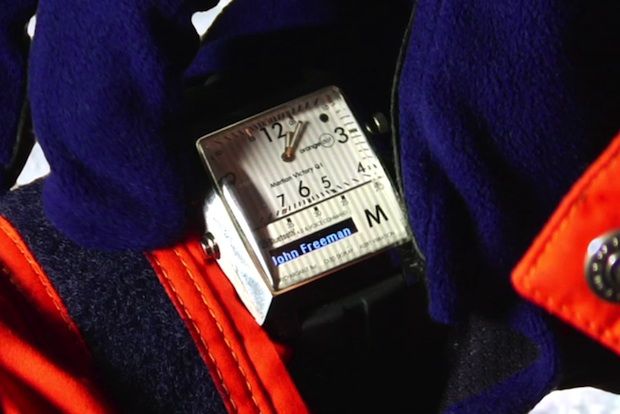
Hold the phone! Or, rather — don’t. Martian Watch models see much of its promised potential unlocked With the launch today of iOS and Android apps, just ahead of their estimated ship date(s).
The app finally adds two major features to the watches — remote camera control and social media updates — along with a few smaller ones.
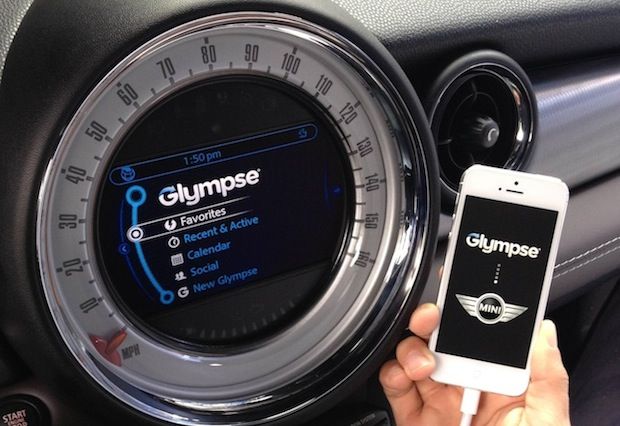
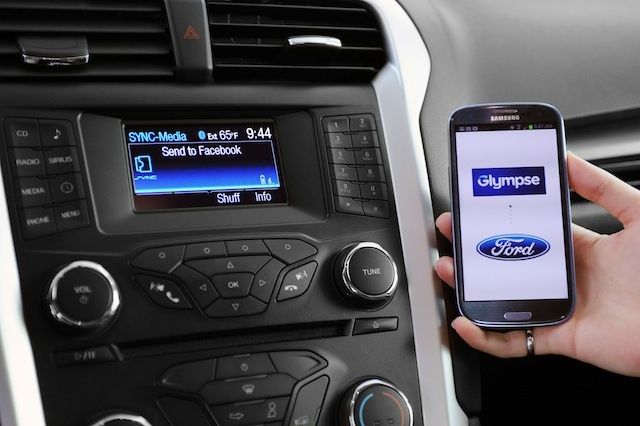
Glympse is a clever — and potentially lifesaving — feature that we’d love to see in more smartphone-connected cars.
It started out as a free app that can broadcast the user’s location to selected contacts, Facebook friends or Twitter followers. But it’s become a valuable tool for drivers of smartphone-connected Fords and Merecedes-Benzes, allowing them to broadcast their location without taking their hands off the steering wheel.
Now BMW and Mini have partnered with Glympse, raising the marque total to four.
LAS VEGAS, CES 2013 – By now it should be obvious to anyone that doing pretty much anything besides actually driving while driving is inherently dangerous — more so when a hand is taken off the wheel, and even more so when focus is split between driving and a phone screen.
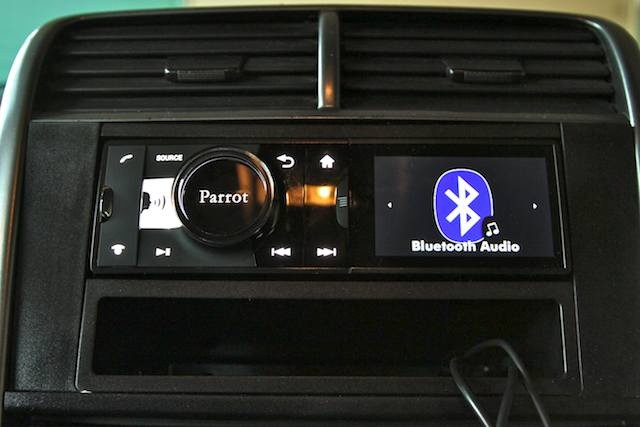
This is the original Parrot Asteroid Classic car stereo head-unit ($349), and it made quite a splash when it launched last year. The single-DIN, 4×55 watt receiver boasts a formidable array of features: Bluetooth connectivity, powerfully accurate voice recognition for both calls and music, a GPS receiver, a bright, 3.2-inch LED screen and a quiver of apps that run off its customized, upgradeable, early-vintage Android 1.5 OS (all of which require a data connection via a dongle).
Though this model was originally called the the Asteroid (no Classic), the Classic nomen was added to lessen confusion as three new models were announced a few months ago. However, the Asteroid Classic still very much in play; in fact, as this review goes live, the Classic is the only member of the Asteroid family currently available, as its new siblings haven’t shipped yet.
With its Android-based OS, you’d be forgiven if you thought the Asteroid Classic was more friendly to Android phones than the iPhone. In fact, the opposite is true, as I’ll explain later. And while it suffers from something that can probably be described as teething trouble, it’s still a lust-worthy system.

Plantronics has a long and storied past making headsets, with their devices even gracing the heads of Apollo astronauts. Here on Earth, it seems impossible to avoid noticing one of their iconic Voyager line of Bluetooth headsets protruding out of someone’s ear while walking down, say, New York City’s Broadway or Wilshire Boulevard in Los Angeles. The latest incarnation of their legendary line, the aptly named Plantronics Voyager Legend Bluetooth Headset ($100), gets some high-tech upgrades, a slimmer profile and improved sound.
When one company swallows another, it’s common for a slow shift in rebranding and design to occur as the two entities thrash out their roles and relationship. The latest shift in the Logitech-Ultimate Ears story — Logitech purchased UE in 2008 — occured a month or so ago, when Ultimate Ears was rebranded as Logitech UE and launched a suite of high-end, blue-tinged soundware, with a product selection that reached far beyond the in-ear monitors the company has thus far been known for. In fact, out of seven new gadgets, just one new IEM was introduced: the Logitech UE 900 ($400), a quad-armature earphone that now sits at the pinnacle of UE’s non-custom earphone line.
The UE 900 has lineage, of course; we loved the snug fit, solid build and amazing sound of its antecedent, the TripleFi 10. But the TripleFi 10 is gone, and the UE 900 has stepped into its place with new ergonomics, a new sound — and a lot of blue.
The Jabra Freeway ($100) is Jabra’s flagship bluetooth car speakerphone. The Freeway has loads of top-rung features like hands-free voice commands, caller announcements and FM music-streaming, wrapped around three loud, powerful speakers accompanied by noise-cancelling dual microphones — making it a very attractive option for drivers who want to add a hands-free speakerphone to their cars.
If you’re lucky enough to be running the latest version of Android (Android 4.1 Jelly Bean) then you already know how awesome improvements such as Project Butter and Google Now are. Google also made great enhancements in its Voice Search, and while it’s kind of Star Trek-ish when your device is talking back to you, it can also be annoying. Thankfully, there’s a way to disable speech output when using Voice Search — you know… for those times when your voice is the only one you feel like hearing.
Discovering great headphones from a company that specializes in making bags was surprisng at first, when we reviewed Incase’s Sonic headphones late last year. A month later we were less stunned when we grunted in approval at their Capsule in-ear ‘phones during our budget(ish) canalphone shootout.
This time around we played with a new denim-clad version of the on-the-ear IncaseReflex headphones ($80) — which sit between the $150 over-the-ear Sonic and the canalphone Capsules — and came away with the impression that the Reflex may very well be the best bang-for-buck of the bunch.
The Mini Boombox ($100) is Logitech’s entry into the hotly contested Bluetooth micro-speaker contest. Like its contemporaries (the Jawbone Jambox and Monster iClarityHD are two prime examples), the Boombox supplies big sound in a tiny, wireless, battery-powered package — only in this case with Logitech’s signature sleek, stylish approach and a futuristic control panel. Let’s take a look at how it stacks up.